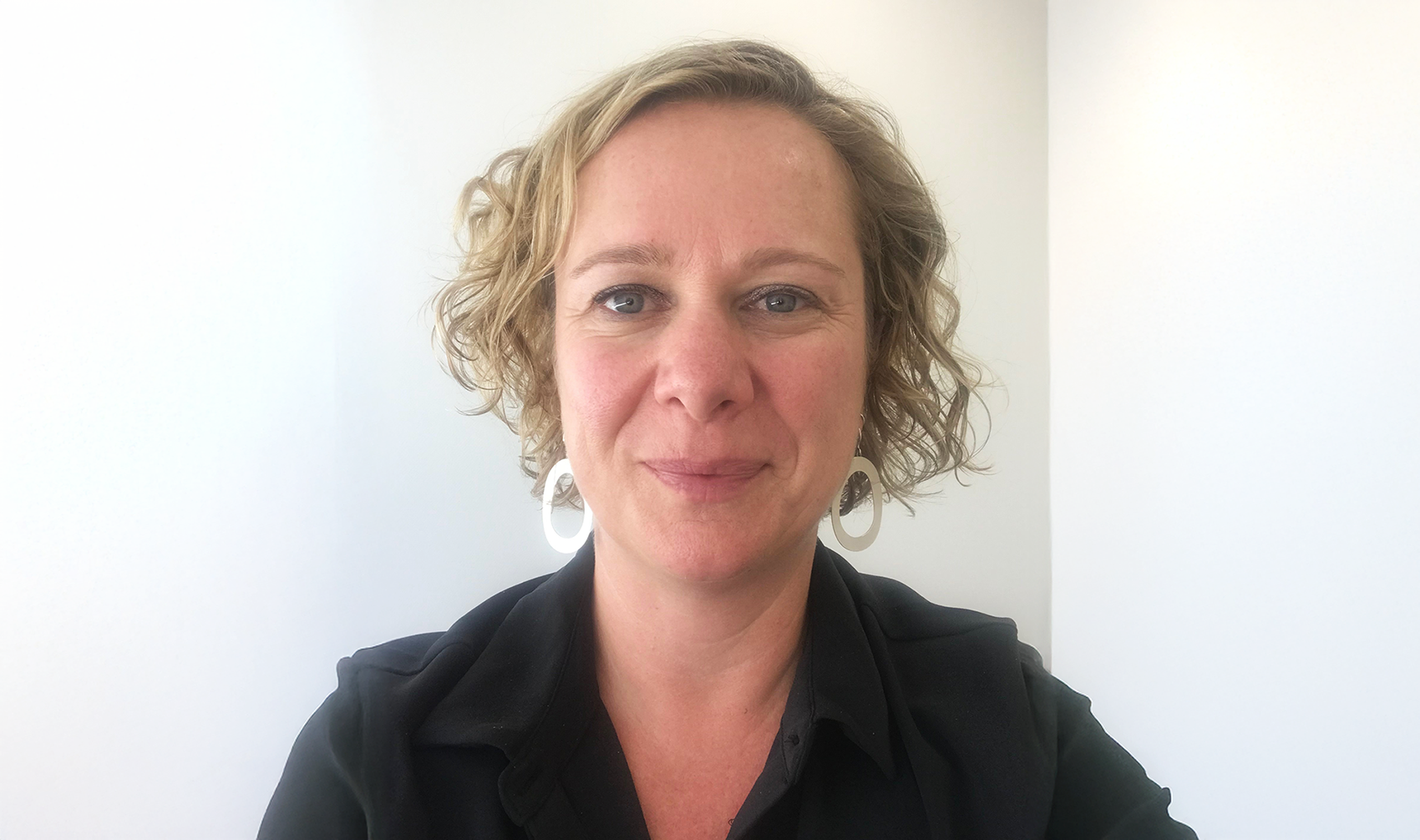
Dr Eva Cloet on the importance of diagnoses in developmental disorders


Developmental disorders such as ADHD, ASD or DCD are often invisible. Not because they have little impact, but because you cannot immediately see them on the outside. A child who has difficulty with social cues, impulse control or motor planning may appear 'normal' on the outside. But that invisibility is precisely what makes it difficult: for parents looking for answers, for teachers trying to understand behaviour, and for children wondering why certain things are so much more difficult for them than for others.
Every year, more than a thousand young children are examined at the Centre for Developmental Disorders (COS) at VUB. Their journey reveals many challenges in our healthcare and education system, but also a surprising number of misconceptions. We spoke at length with Dr Eva Cloet, director of COS, about the importance of diagnostics, the stigma surrounding 'overdiagnosis', the impact of waiting lists, and what children with invisible needs really need.
Many parents come to COS with a similar story: they see that their child is struggling, but they find it difficult to explain why. They sense that something is not going as expected, but cannot immediately put their finger on it. This lack of language creates uncertainty. According to Eva, this is precisely where diagnostics show their greatest value.
“Diagnostics seeks to identify what is going on. It brings coherence to separate observations and feelings. Parents often intuitively sense that something is wrong for years, but lack the words to frame it. A diagnosis provides that language. A diagnosis is therefore not a sticker or label. It is a framework for thinking.”
That framework is not just informative. It helps families understand why certain behaviours occur, that they stem from underlying difficulties. That insight reduces feelings of guilt, shame or the idea that more 'should' or 'strictness' is needed.
Not unwilling, but unable
Eva hears this every day in conversations: ‘For many parents, it is a relief when it becomes clear that their child is not 'unwilling' but 'unable'. That is a world of difference. It opens the door to support and greater leniency, both at home and at school." Diagnostics also has a very practical function. In consultations with speech therapists, physiotherapists, CLB staff and teachers, a diagnosis enables everyone to speak the same language. "It connects those involved with the child", says Eva. "It clarifies what support is needed, what is not, and how the environment can help. Without that shared language, we sometimes get stuck in interpretations. That is inefficient and stressful for families."
In addition, a diagnosis gives many families access to support that they would not otherwise receive: targeted therapy, educational adjustments, guidance from specialised services. And that is necessary, because the needs of children with developmental disorders are often real, but difficult to see. Precisely because developmental disorders are not always visible on the outside, they are sometimes questioned. Parents hear comments such as “but I don't see that in him”, “that didn't exist in the past”, or “everyone has something”. Eva nuances this: "Difficulties that you don't see are more easily minimised. This applies to many forms of neurodiversity. But the fact that something is invisible does not make it any less real."
"Parents considering a diagnosis are implicitly told that they are participating in a hype"
The myth of overdiagnosis
She observes how parents often tend to downplay their concerns for fear of 'overreacting'. "The taboo runs deep. Many parents wait too long, make excuses for themselves, or think that "things will get better".
Social reactions reinforce this. One of those reactions is the recurring debate about 'overdiagnosis'. It is a topic that receives a lot of attention, but rarely with nuance. Eva is clear: "There is no solid, comparative research showing that we overdiagnose in Flanders. This is often claimed without any scientific basis."
The problem is that statements like these have a major impact on families. “Parents who are considering a diagnosis are implicitly told that they are participating in a hype. That is hurtful. It does not do justice to their child's reality.”
Moreover, the reality is more complex than the debate suggests: “It is also unclear what exactly is meant by overdiagnosis. Are too many diagnoses being made? But where is the norm and how or by whom is it determined? Or are too many incorrect diagnoses being made? But how was it determined which diagnoses are incorrect and that there are so many that we can talk about overdiagnosis?"
Diagnosis as an entry ticket
An important driver behind the rising demand for diagnostics is the way our education system is organised. Support, resources, or certain adjustments are often only granted once an official diagnosis has been made, even though regulations do not always require this. “In a system characterised by scarcity, diagnostics become a ticket to access,” says Eva. “Parents who see their child struggling logically go in search of that ticket.” This sometimes leads to frustration and misunderstandings. Schools are faced with high expectations and limited resources. Parents, on the other hand, feel that their child needs support but cannot get it without documentary evidence.
"Even if we could deploy a hundred extra people tomorrow, we would not be able to completely eliminate the waiting lists"
Eva also observes that some adjustments are refused in practice, often based on individual perceptions. “A child looks ‘normal’, so people assume that it also functions ‘normally’. But many needs are invisible. And that invisibility creates barriers.” In addition to education, the organisation of diagnostics itself remains a major challenge. Waiting times are long, sometimes painfully long.
But according to Eva, this cannot simply be solved by expanding capacity. “Even if we could deploy a hundred extra people tomorrow, we would not be able to completely eliminate the waiting lists. The current diagnostic system is slow because of the way it is structured: fragmented, sequential, and dependent on different, often separate organisations.”
She advocates a more process-oriented approach: support and diagnostics that can run simultaneously, rather than in defined steps. This would provide families with support more quickly and relieve pressure.
Picking up signals
The insights gained from Eva's recent policy support research contributed to the launch of Flemish pilot projects that investigate how diagnostics can be organised more efficiently and flexibly. These projects examine, among other things, how organisations can collaborate more effectively, how duplicate steps can be avoided, how support needs can be identified more quickly and how the turnaround time for families can be reduced.
In addition, a new research project is underway within COS, aimed at mapping the impact of diagnoses and advice on children and families themselves. “It is striking how little research there is into how families really experience diagnostics,” says Eva. “We hear many opinions, but we have surprisingly little data. We are now changing that.” Furthermore, an application has been submitted to the Research Foundation Flanders (FWO) to expand this type of research on a larger scale to other care contexts. The decision on this will follow soon.
At the end of the interview, Eva returns to the core of her message. “Diagnostics is not a buzzword or a mass product. It is a careful process that helps children and families to understand themselves better. If we want to revise terms or adjust processes, we should certainly do so. But let's stop stigmatising.”
According to her, children — and their parents — deserve recognition above all else. “The needs they struggle with are often invisible. That doesn't make them any less important, on the contrary. The more invisible the difficulty, the more nuance and openness is needed.”
And that, in essence, is what her plea stands for: a society that looks not only at what is visible, but also at what is happening discreetly and quietly — in minds, in bodies, in families. "We must take children with invisible needs seriously. They often already give signals. Our job is to hear them, understand them and support them. And a diagnosis is a powerful tool in this regard."
Bio
Eva Cloet (VUB/UZB) is a speech and language therapist and researcher, and director of the Centre for Developmental Disorders (COS) within the paediatric neurology department at the UZ Brussel, the hospital of the VUB. She combines care coordination with research into healthcare policy and the organisation of multidisciplinary diagnostics. As a doctoral researcher at the VUB, she focuses on developmental disorders and supervises students in both teaching and research.