“We train the trainers to create social value”

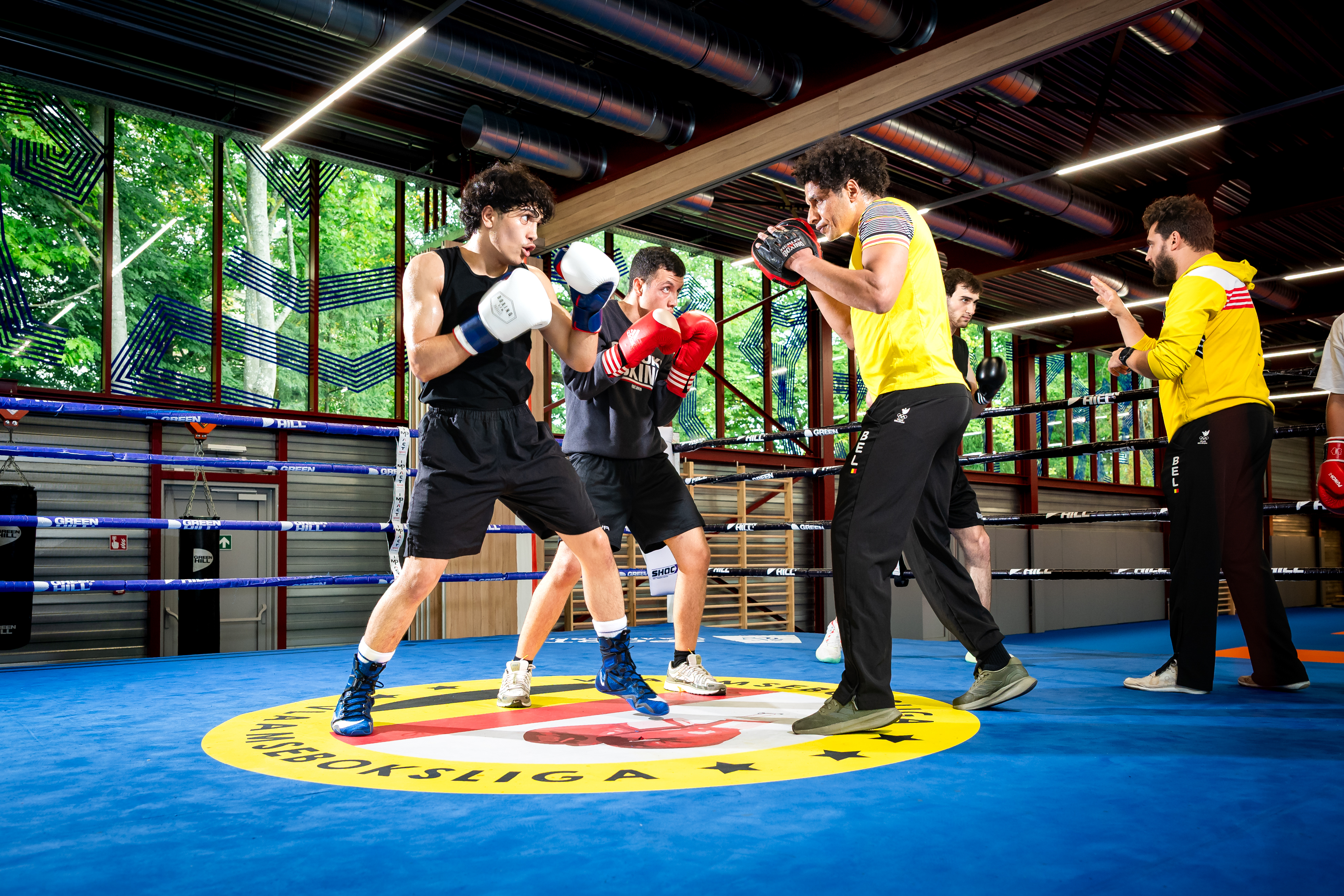
You’re standing face-to-face with your opponent. Do you see red? Do you flinch? Do you freeze? Martial arts throw you right into the action, says Professor Marc Theeboom. “That unique setting can be used by martial artists to develop personality and social skills. But it doesn’t happen automatically. We can teach trainers specific methods to make that happen.”
The late Rector Paul De Knop – jokingly nicknamed Paul the Builder – sparked a radical transformation of the VUB’s sports infrastructure 4 years ago. The swimming pool, athletics track, football pitch and sports hotel (now U-Residence) all received a major upgrade. At the festive opening, Marc Theeboom from the Sport & Society research group (SASO) already had his own dream in mind. “I wanted to build something too: a hall for martial arts, because that has always been my passion. This hall is the crowning achievement of my career at VUB – I’ll retire in October 2026. But it’s also a new beginning. I’m not closing the door behind me. I want to stay involved and make sure this hall is in good hands.”
The brand-new martial arts facility sails under the flag of CEMAS: Centre for Martial Arts and Science. It was funded by VUB, Sport Vlaanderen, the Flemish Brussels Fund, the Flemish Community Commission (VGC) and the Flemish Boxing League. CEMAS offers a solid 800 m² of dedicated training space, built between the 2 existing sports halls.


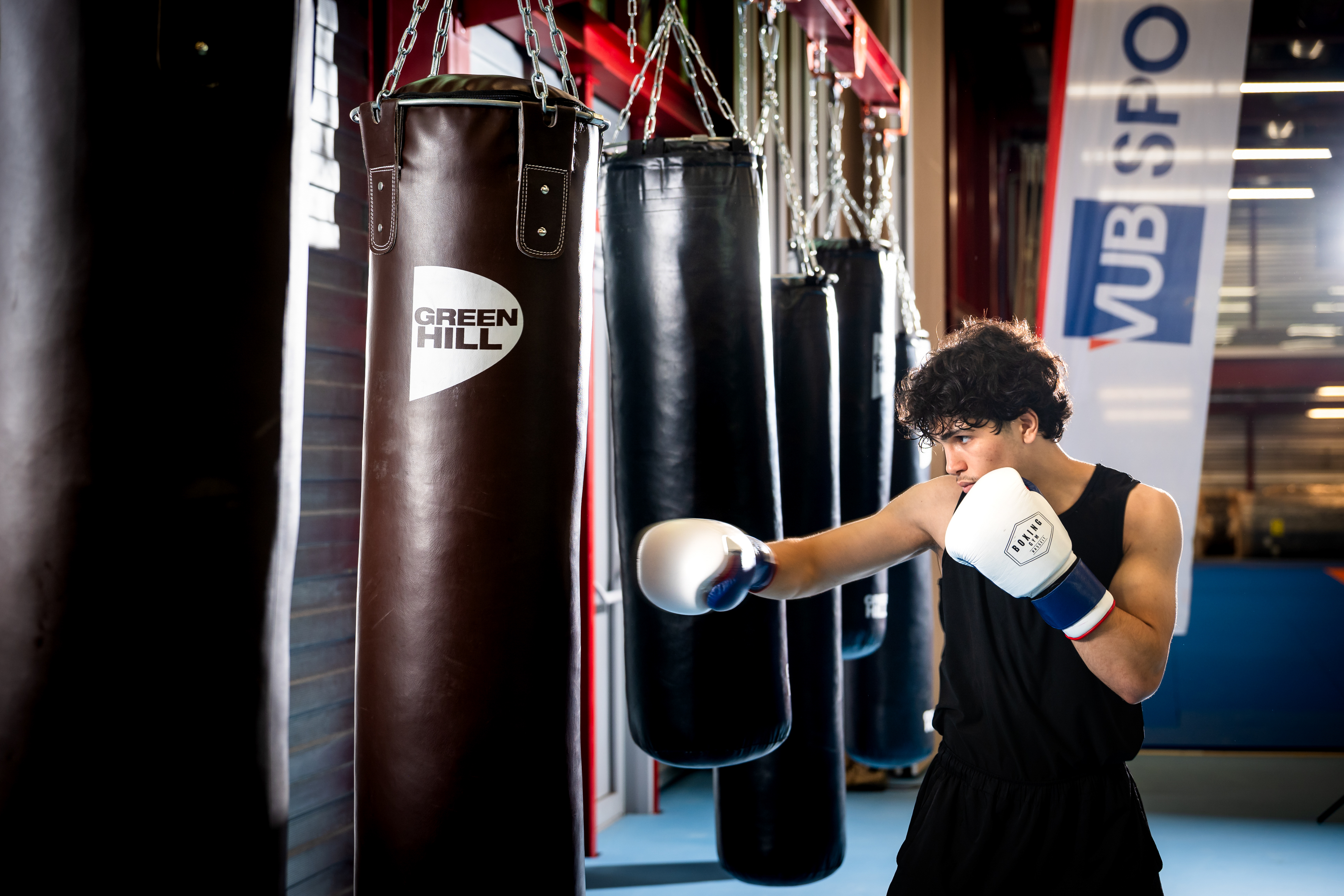
Marc Theeboom: “It’s 1 large hall that can easily be split into 2 using a sliding wall. Each side has its own corridor and entrance; 1 side is the mats hall, with blue and orange mats in VUB colours and mirrored walls. It’s designed for wrestling, judo, karate, taekwondo and Chinese wushu, including tai chi. The other side is the boxing hall, with permanent and mobile rings, punching bags and specialised equipment. Kickboxing and Muay Thai are also welcome here.”
Because the hall connects to the existing sports complex, there was no need to invest in new parking, showers, changing rooms or reception – these are shared. The Flemish Boxing League (VBL) also invested in CEMAS, as it will train both its youth and elite teams here. For Ibrahim Emsallak, General Coordinator of the VBL and a former VUB student, this feels like coming home.
"It’s not sport itself, but the way you use sport"
The Brussels martial arts community is delighted with the new hall. A study by perspective.brussels and VGC Sport showed that the city has more than 250 martial arts clubs. The vast majority have to train in school gyms or basement rooms, without access to proper facilities designed for martial arts.
“Before CEMAS opened, around 10 associations were already making use of VUB’s sports infrastructure. They’ll be the first to move into the new hall. Other clubs can also apply. And, of course, just like our other sports facilities, the CEMAS hall is open to students and staff of the university.”
So yes, the new hall partly fills a gap in Brussels’ infrastructure. But the ambition goes far beyond that. CEMAS provides clubs with expert knowledge on training methods, mental preparation, nutrition and more. The academic focus is on martial arts as a catalyst for personal and social development. That has been the red thread in Marc Theeboom’s career, from his first research on how sport can support vulnerable youth.
“Many Brussels youngsters are drawn to martial arts, especially the tougher forms. A growing number of organisations use martial arts to pursue social goals: personal growth, identity building, school engagement, even access to the job market. Sport is even used in preventing radicalisation. As the saying goes: sport keeps young people off the streets.”
"In martial arts, you face obstacles head-on"
But Marc warns against naïve thinking. “That doesn’t happen automatically. Too many organisations and trainers still believe it does. Just because a young person joins a martial arts club doesn’t mean they’ll stop skipping school or avoid racism, homophobia or other destructive behaviour. Sport itself does nothing – it’s the way you use sport that makes the difference.”
The Sport & Society group has spent years researching how to create real social impact through sport. Now, they want to share that expertise with trainers, coaches and club leaders.

“It’s not enough to tell young people to be on time and disciplined. Any coach can do that. The challenge is to shape the sporting context so they have an aha-moment. That when they overcome an obstacle in the dojo or ring, they realise: I can also do this outside of sport. We call it an experiential learning context. Sport confronts you with problems, fears, setbacks. How do you respond? Can you regulate your emotions, set priorities, respect others? And when similar challenges come up at school or on the street, can you draw on that sporting experience? Sport becomes a tool to develop life skills.”
Trainers already know how to teach technical skills. But that doesn’t automatically make them psychologists, mentors or educators. That’s where CEMAS steps in.
“Last year we coordinated a European project on this very theme. From that, we developed Coach Plus, a Massive Open Online Course (MOOC). At CEMAS, we’re expanding that work. Trainers can learn how experiential learning works, which activities help, and how to build in reflection. These are not covered in regular coaching programmes. That’s why CEMAS isn’t just a martial arts hall – it’s an expertise centre for martial arts.”
CEMAS in the spotlight
Marc Theeboom is a professor at Vrije Universiteit Brussel, affiliated with the Faculties of Physical Education and Physiotherapy and Psychology and Educational Sciences. He chairs the Sport & Society research group and specializes in the social, pedagogical, and policy-related dimensions of sport. His research focuses on youth sport, social inclusion, vulnerable groups, and the role of sport as a catalyst for personal and societal development. He is also internationally recognized for his work on martial arts and their impact on young people and society.

In this article:
- What makes martial arts a unique setting for personal and social development?
- Why does practising sport not automatically lead to greater discipline, respect or self-confidence?
- How can coaches use martial arts to help young people develop important life skills?
- What role will the new CEMAS expertise centre play in the martial arts community in Brussels?