
€156.5 million investment, European recognition and cutting-edge infrastructure

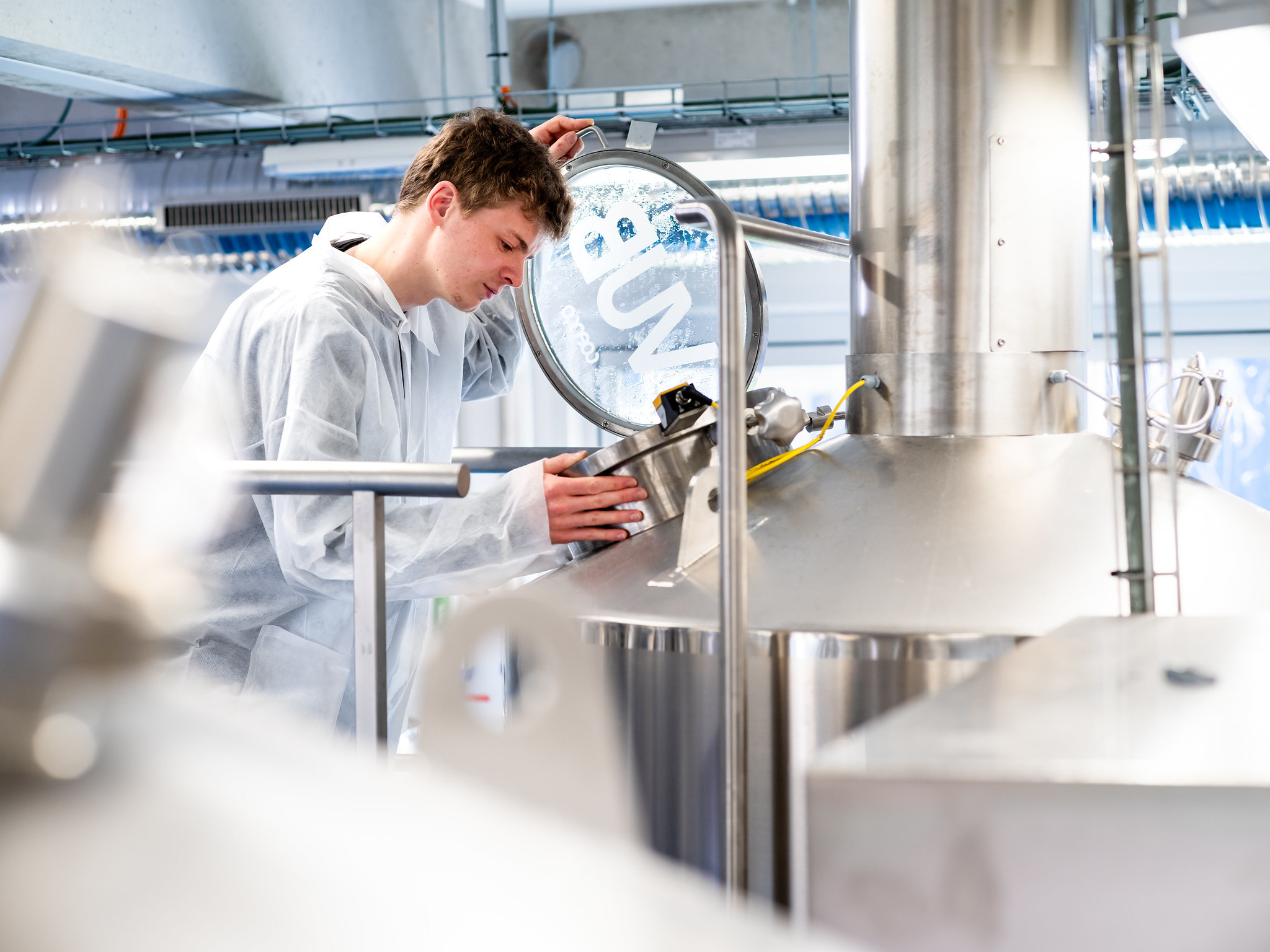
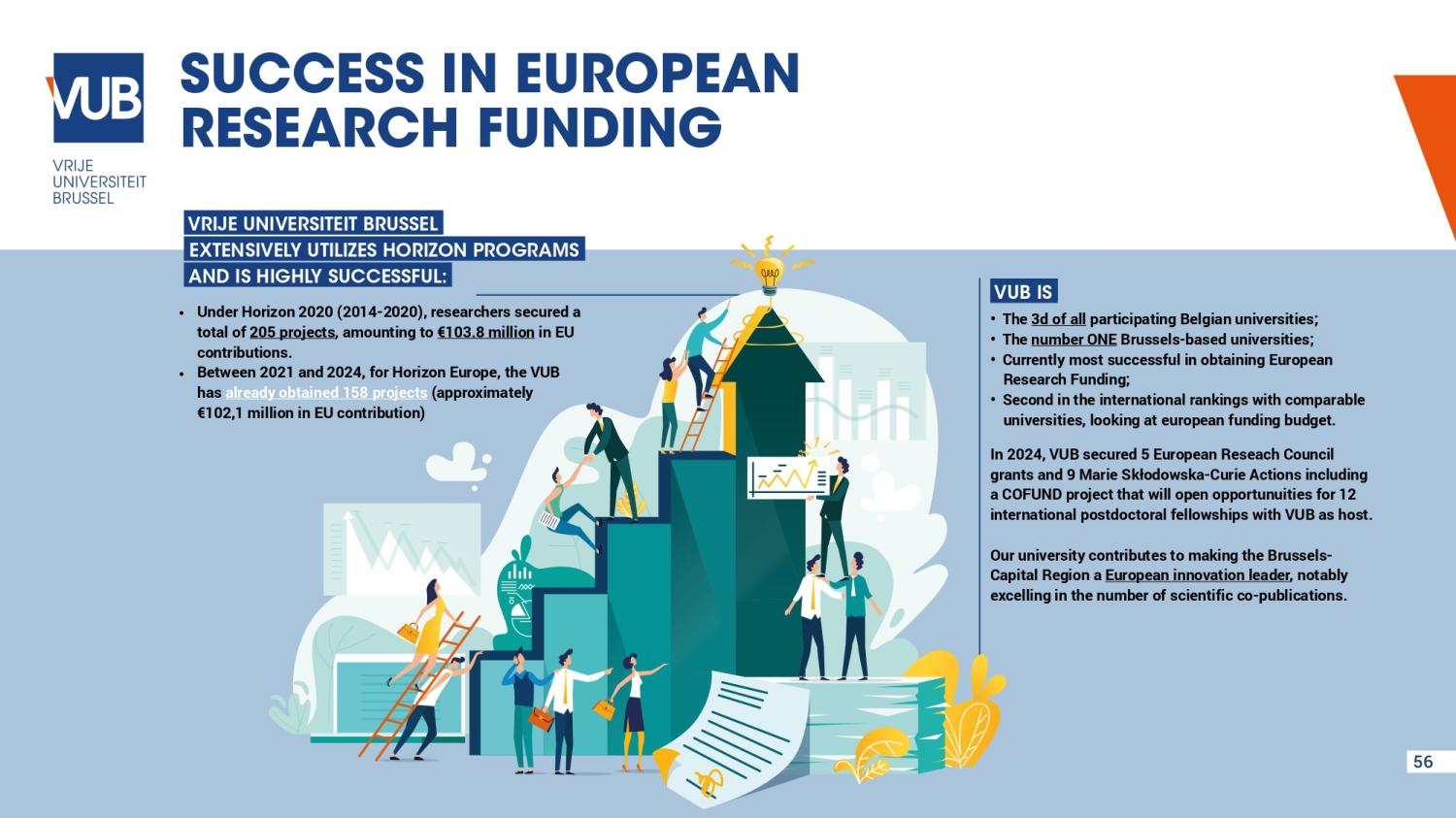
The Vrije Universiteit Brussel (VUB) reached an unprecedented milestone in 2024 with its research strategy. With a record €156.5 million invested in research, the university has strengthened its role as a leading player in Brussels and across Europe. It is not only the scale of investment that stands out, but also the impact and recognition that come with it.
Under the Horizon Europe programme, VUB secured no fewer than 158 research projects, amounting to €102.1 million in EU funding. Within its category, this makes VUB the most successful institution in Europe for attracting such grants. The projects span a wide range of fields, from climate science to digital innovation and medical technology.
In addition, the university obtained five prestigious ERC (European Research Council) grants, supporting groundbreaking fundamental research. A further nine Marie Skłodowska-Curie fellowships were awarded, aimed at international mobility and postdoctoral research.
“As a university, we have made a clear choice: we invest not only in excellent research, but also in the infrastructure that makes it possible. That is essential to stimulate interdisciplinarity and societal relevance.”
This infrastructure is taking shape through a series of newly launched and enhanced research platforms. The BruBotics Rehabilitation Research Center opened its doors as a high-tech facility for movement analysis and technology-assisted rehabilitation. Located between UZ Brussel and the VUB Health Campus, it brings together various research groups and focuses on human-centred robotics.
The Visual and Spatial Tissue Analysis (VSTA) platform has also been expanded. It supports cancer research and precision medicine through advanced RNA and protein expression techniques, DNA mutation analysis and digital imaging.
Meanwhile, for researchers in the social sciences and humanities, the Brussels Digital Text Lab (B-TXT) provides support in collecting, analysing and archiving digital textual data. As a hub for digital humanities, it promotes computational approaches in historical and linguistic research.

VUB’s scientific impact is also reflected in individual recognition. Mathematician Sam Mattheus solved an 85-year-old problem, earning both the EOS Pipet Prize and the international Frontiers of Science Award. Ann Van Griensven was awarded an AXA Research Chair for her work on water quality and climate adaptation.
The BruBotics team received recognition from the Royal Flemish Academy of Belgium for Science and the Arts for excellence in science communication, while climate scientist Wim Thiery was honoured with the Laureate of the Academy Award for his research on climate extremes.
"Our researchers are able to compete at the highest level in Europe"
The achievements of 2024 show that VUB is not only competing at the top tier, but is also actively shaping the science of tomorrow. Through strategic investment, international recognition and world-class infrastructure, the university continues to fulfil its societal role as a driving force for innovation and knowledge.


Research Valley VUB
Where Science and Society Meet
On the green campus of the Vrije Universiteit Brussel, an ecosystem dedicated to innovation is taking shape: the Research Valley. Here, advanced research facilities join forces to tackle societal challenges, from health and climate to mobility and the circular economy.
Bio Incubator Brussels
In partnership with the Flemish Institute for Biotechnology (VIB), the Bio Incubator provides a breeding ground for biotech start-ups. The incubator hosts, among others, the VIB Nanobody Core Facility, which is developing groundbreaking nanobody-based therapies.“We aim to bridge the gap between fundamental research and commercial applications that transform healthcare,” says Prof. Jan Steyaert.
MICROLAB
This brand-new 300 m² cleanroom is equipped for the microfabrication of glass and silicon. MICROLAB supports both academic and industrial research into microfluidic applications for the medical and pharmaceutical sectors.“We are building the chips of the future — not for computers, but for fluids,” says the team at MicroFlow Cell.
Cryo-Electron Microscopy
The VUB is home to one of Europe’s most advanced cryo-electron microscopes. This technology enables researchers to visualize proteins at the atomic level, providing crucial insights for drug development and fundamental biological research.
Circular Retrofit Lab
In this experimental lab, former student residences are being transformed into flexible, circular buildings. The lab is a pilot project within the European Horizon 2020 programme and demonstrates how reusable construction materials and demountable structures can help shape the future of sustainable building.
MOBILISE
This research group analyses mobility patterns and develops tools to make cities more sustainable and inclusive. From participatory planning methods to logistics models, MOBILISE connects science with policymaking and citizen engagement.“Our mission is to mobilise people to help shape the mobility of tomorrow.”
Climate Chambers
On the fifth floor of Building F, six new climate chambers allow researchers to study plants under carefully controlled conditions. Here, Prof. Harry Olde Venterink investigates how fertilisers, temperature and CO₂ levels affect ecosystems.“By sharing resources, we were able to install six chambers at once and simulate complex climate scenarios.”
Organic Chemistry
The laboratories of the Organic Chemistry research group are located on the top floor of Building G. According to Head of Department Prof. Steven Ballet:“We conceive, design and build molecules that do not exist in nature and can be used for remarkable applications, including in medicine".The research facilities include a wet lab, where new molecules are created, and a dry lab, where the structures of existing molecules are analysed and mapped. Both labs are equipped with state-of-the-art technology.


